
Heated driveways
Heated driveways for Canadian winters
A heated driveway uses electric heating in or beneath the surface to melt snow and ice, so you are not out there with a shovel. Here is how it works, what your options are and how a project comes together.
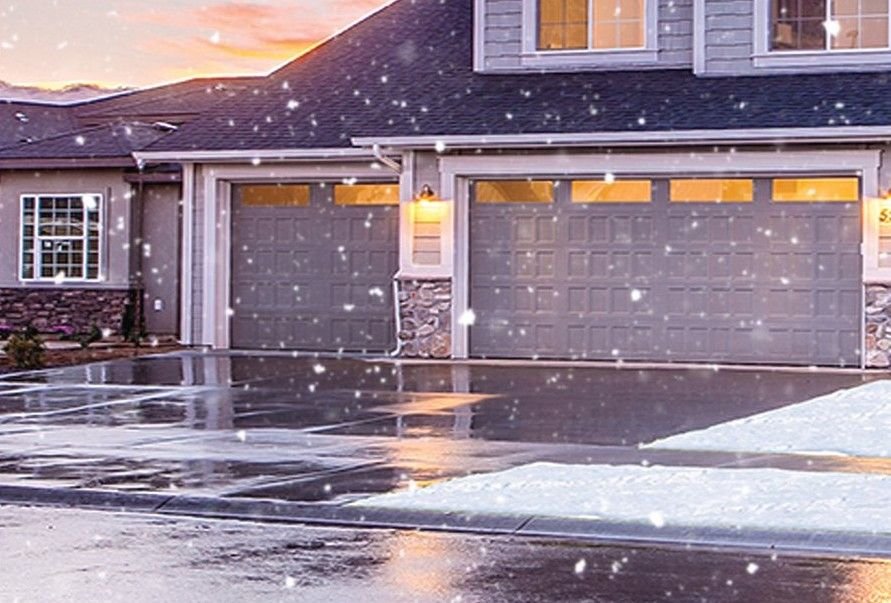
How a heated driveway works
Snow, then a sensor, then a controller, then heat in the surface. Select a step to see what happens.
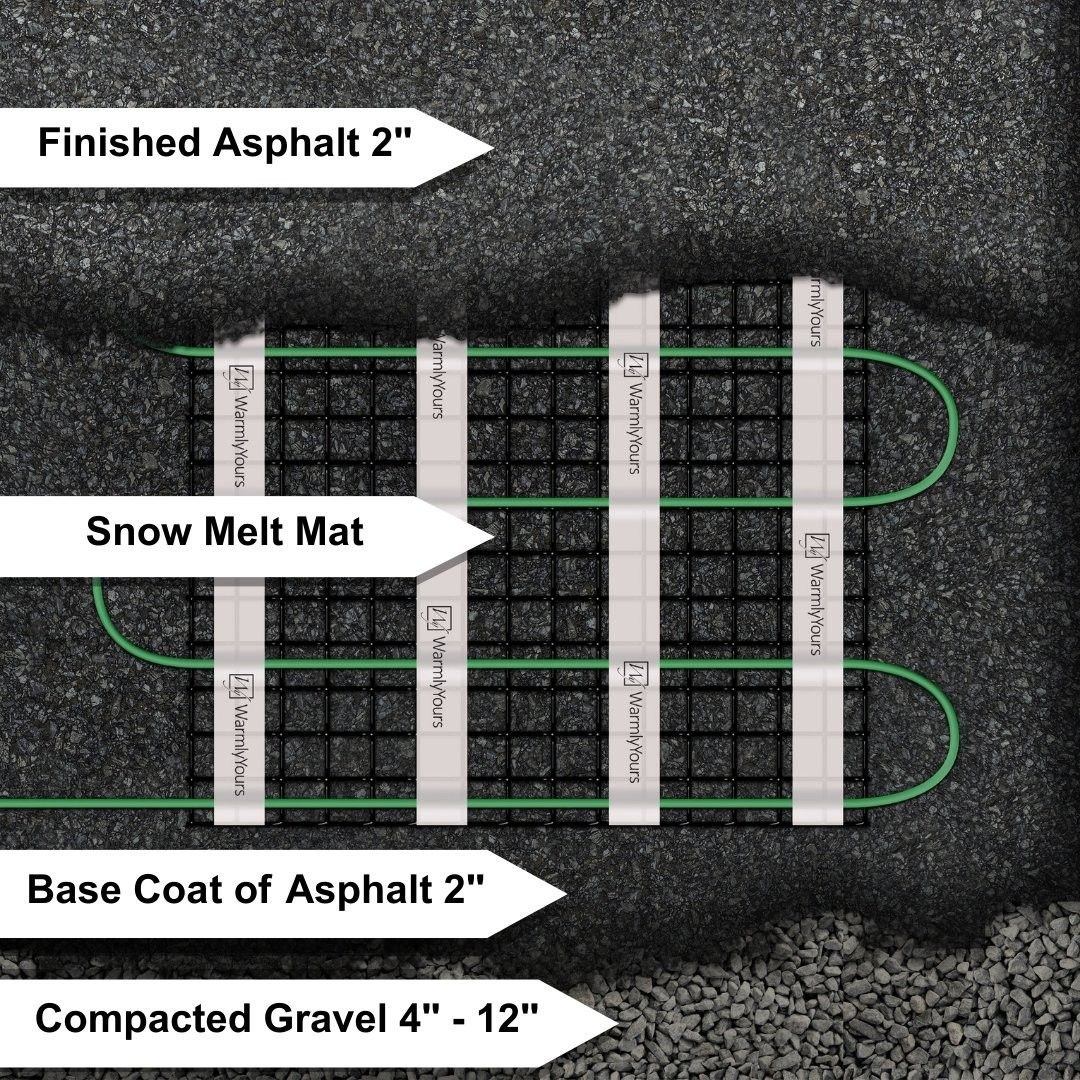
Image: WarmlyYours
Snow starts to fall and the surface is cold. Nothing is running yet.
A sensor picks up the moisture and temperature conditions that mean snow or ice is forming.
The controller switches on the heating elements. Nobody has to be home or lift a finger.
Heat spreads up through the surface, warming it so snow melts instead of building up.
Snow and ice melt and the meltwater drains off the surface. The path stays clear.
The controls keep the system running long enough to clear remaining moisture, then shut it down. Exact after-run depends on how your controls are set up.
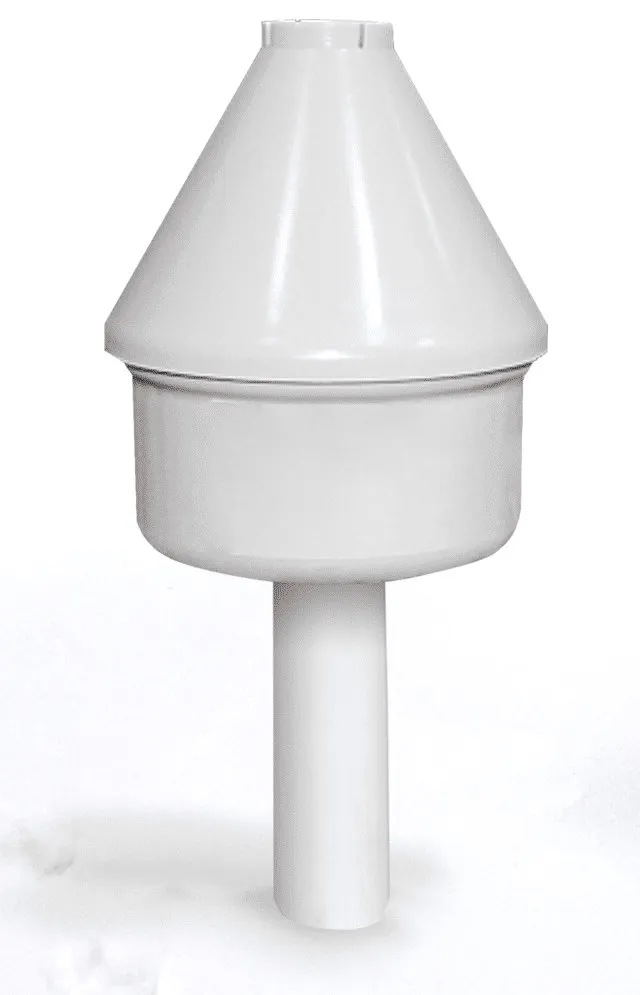
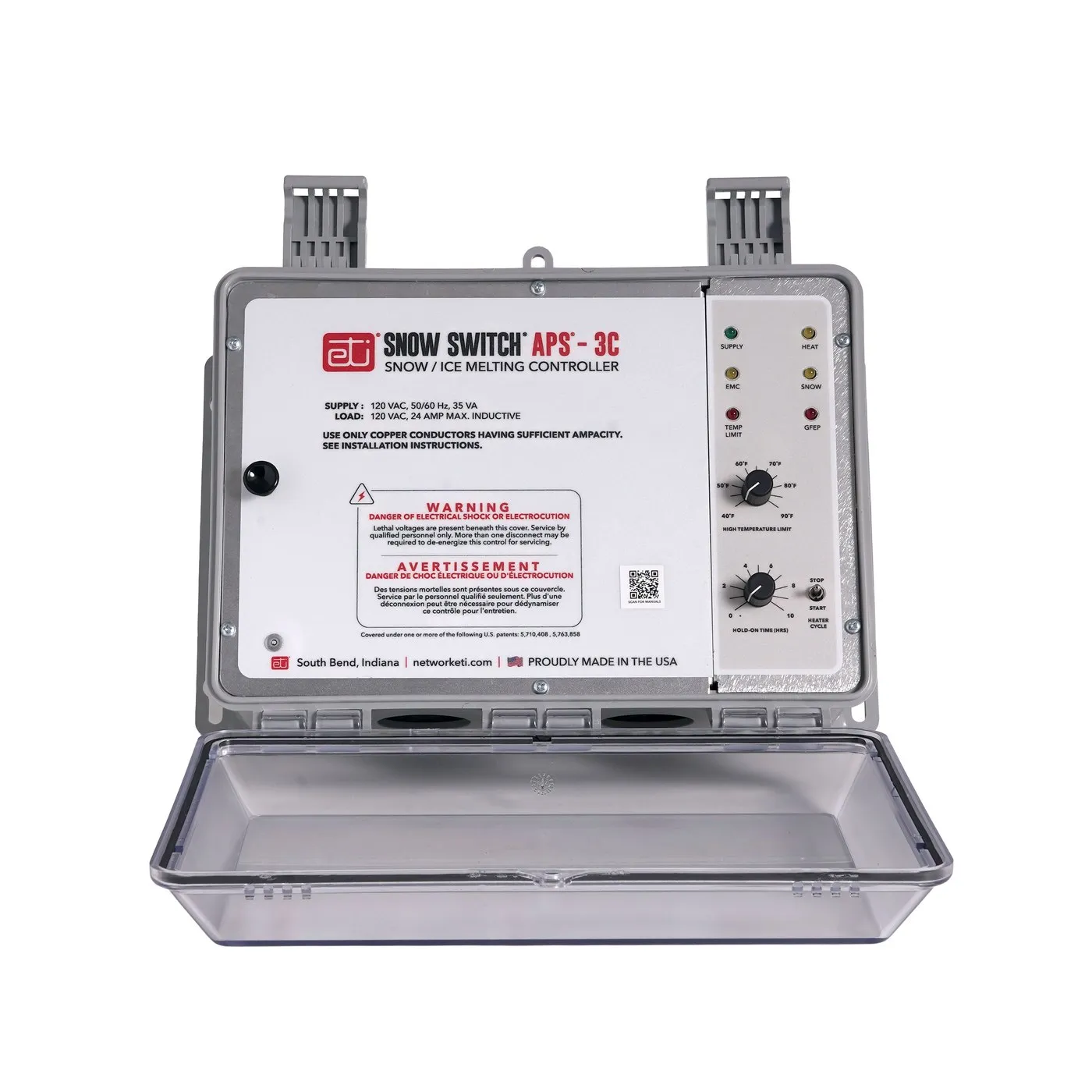
Components shown are WarmlyYours products. Your design confirms which ones your project uses.
What is your driveway made of?
The heating is installed as part of the surface, so the method depends on whether you have asphalt, concrete or pavers.
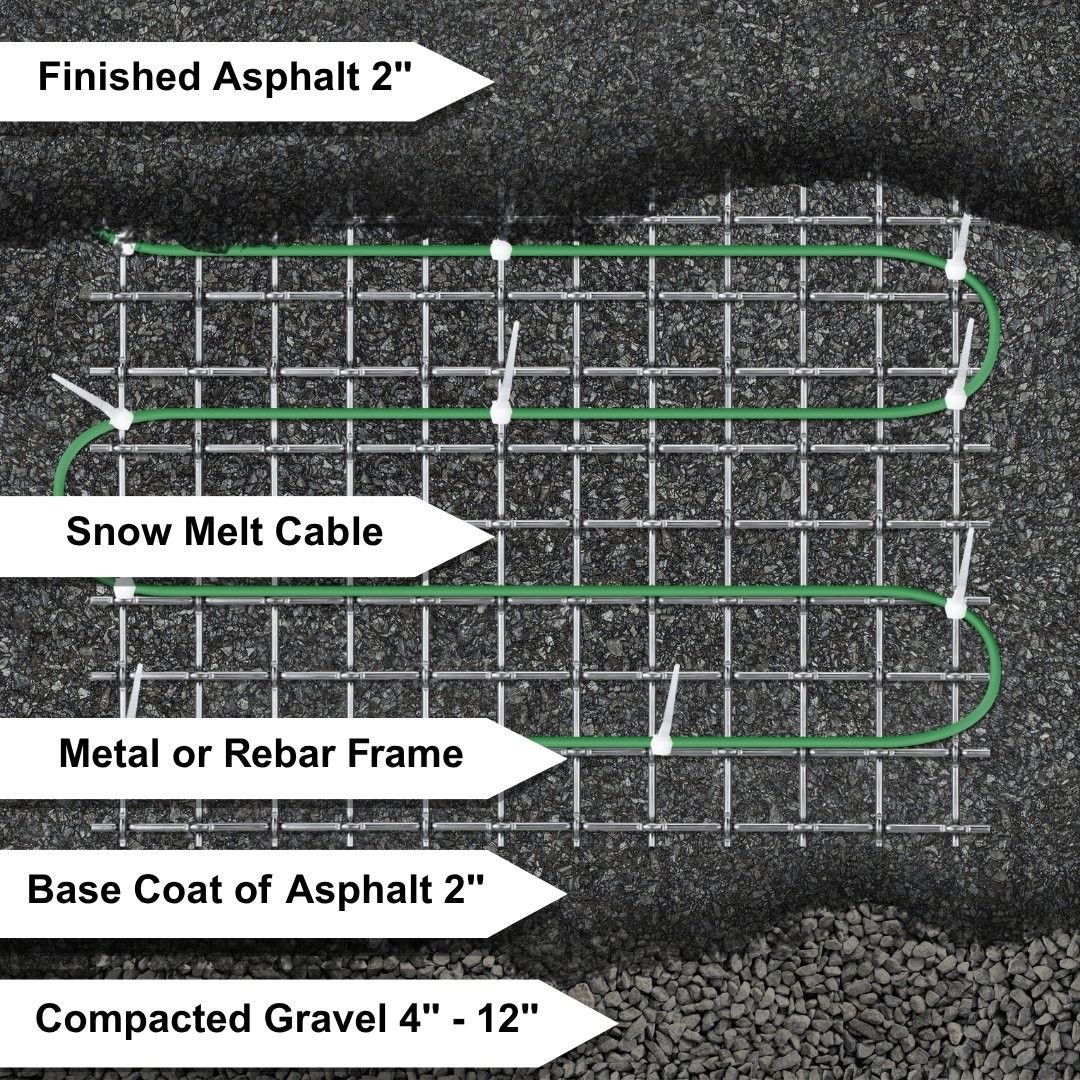
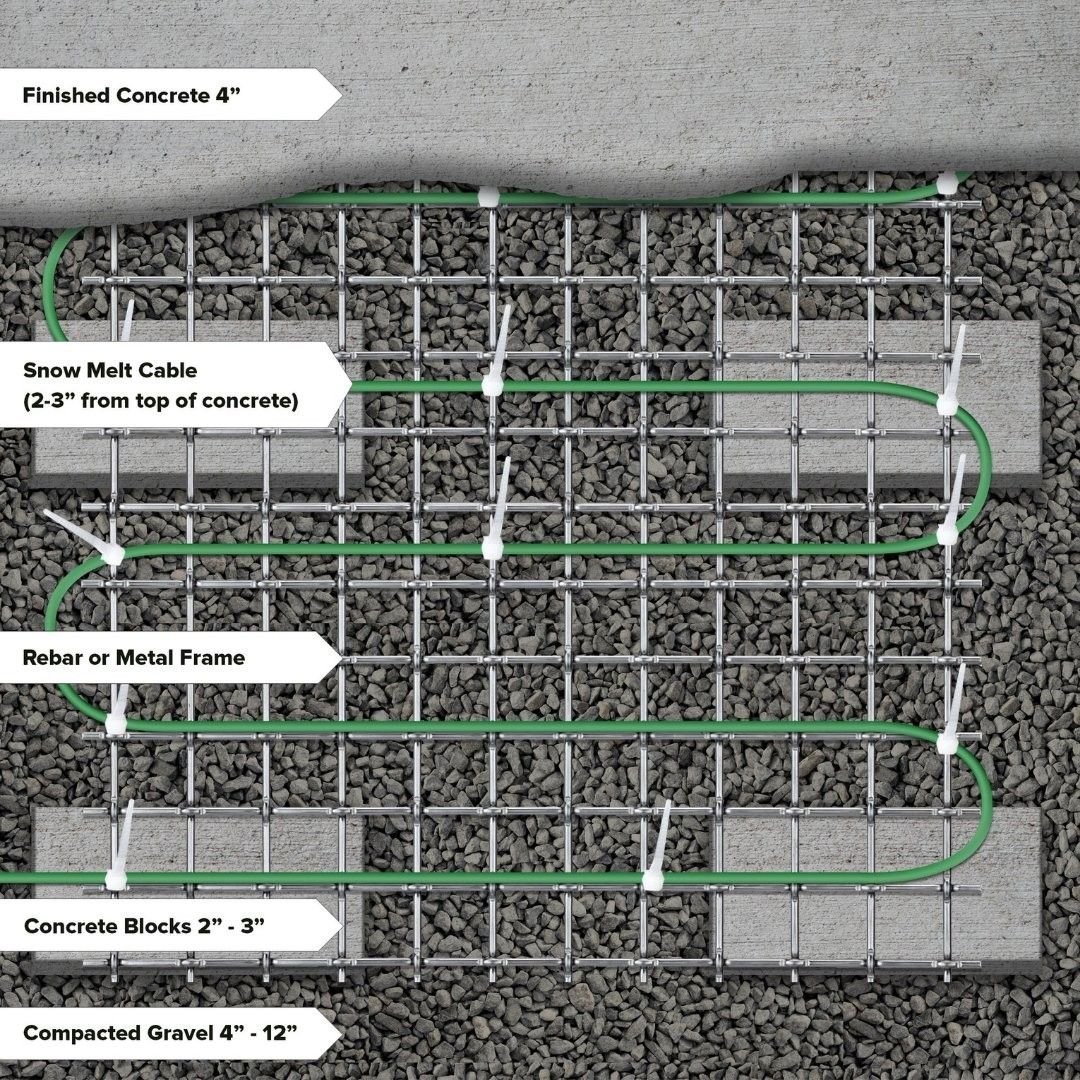
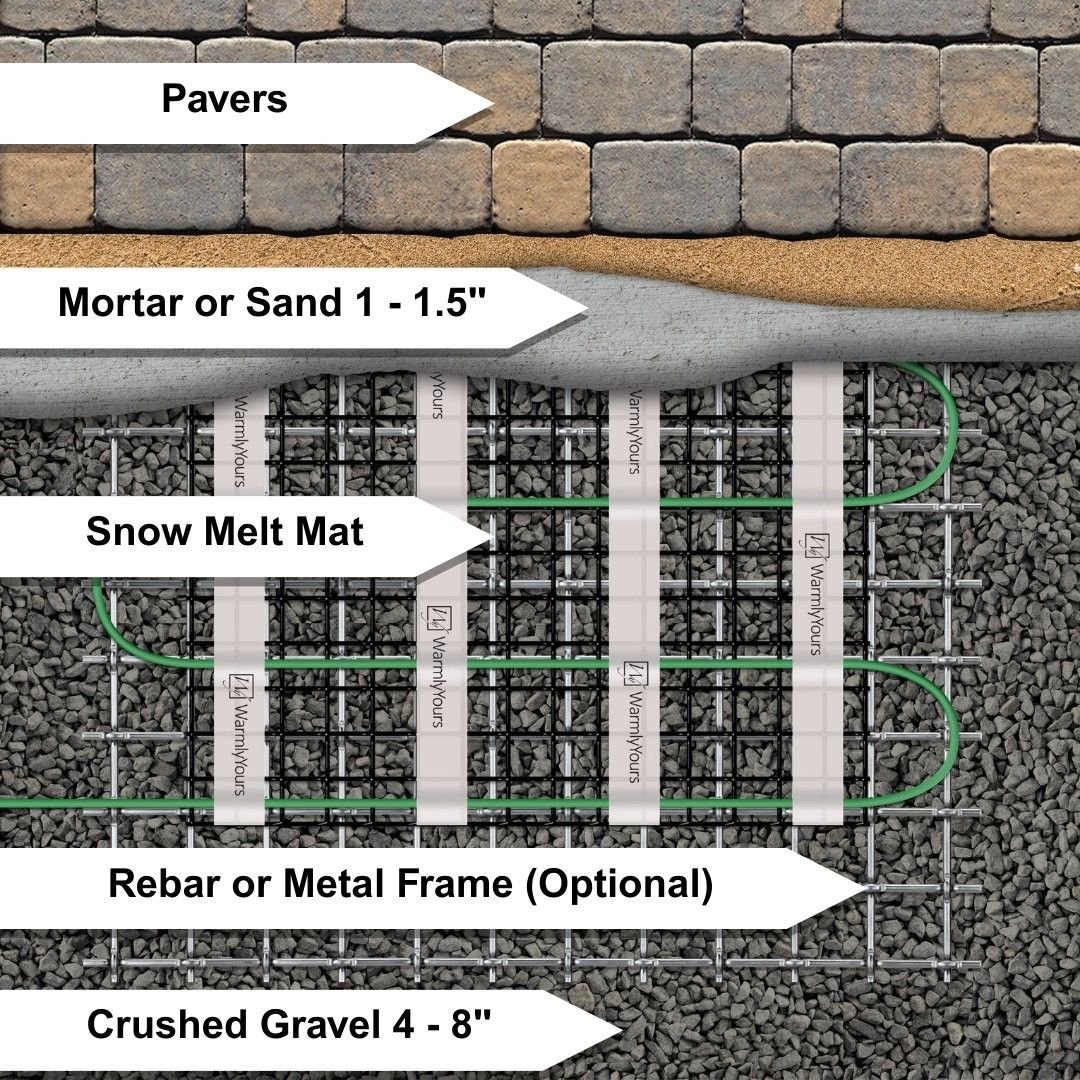
You do not have to heat everything
Heat the whole driveway, or only the parts you use most. Heating less area generally means less material to install and less power to run.
- Heated: stays clear
- Not heated: snow stays
What to plan before you build or resurface
Snow melting goes in with the surface, so decisions made early save rework later.
The surface and how it is built
A new driveway or a replacement is the simplest case. An existing driveway may be an option, depending on its condition and construction.
Electrical supply
Available power, panel capacity and the distance from the panel to the driveway all shape the electrical work. A qualified electrician connects the system.
How much to heat
Full coverage, tire tracks, the entrance and apron, or targeted areas. The right choice depends on how you use the driveway.
Controls and sensors
Automatic sensor-based control, a timer, or a manual switch. The control approach affects how the system runs.
Timing with the construction
Installation follows the paving, concrete or interlock schedule, so planning ahead helps.
Who coordinates
The design, the electrician and the surface trades need to work to the same plan. That is the part MeltGrid coordinates.
Heated driveway questions
Direct answers first. For anything specific to your property, ask us and we will look at it in your design.
Does a heated driveway run all winter?
No. With a sensor-based control the system switches on when conditions call for it, that is, when the sensor detects the temperature and moisture that mean snow or ice is forming, and switches off after the surface has cleared.
Timer and manual controls are also available. Your design chooses the control approach that suits how you use the property.
Can a heated driveway be added to an existing driveway?
Often, yes. The manufacturer’s installation manual includes methods for existing surfaces: heating cable set into cut grooves in finished asphalt or concrete, or a new layer of concrete over heating cable on an existing slab.
Which method suits your driveway depends on its condition and construction, so an assessment confirms the options.
Which driveway surfaces can be heated?
Asphalt, concrete and pavers or interlock. Each is built differently, so the heating layout and installation method are designed for the surface you have or are about to build.
Do I have to heat the whole driveway?
No. You can heat the whole surface, only the tire tracks, only the entrance and apron, or targeted areas such as steps and walkways. Your design compares the options for your driveway.
Who installs a heated driveway?
Snow melting is installed as part of the surface work. A qualified electrician connects the system, and the paving, concrete or interlock contractor works to the design. MeltGrid coordinates the design and the trades through one project relationship.
How much does a heated driveway cost?
It depends on the size of the area, how much of it you heat, the surface, the electrical work, the controls and the site conditions, so we do not publish fixed prices. A free design and estimate gives you a number for your property.
Ready to plan your driveway?
Tell us about your property. We come back with a design and an estimate.