
Open areas
Snow melting mat
Heating cable pre-spaced on a mesh, rolled out over the base coat.
- Suited to square or rectangular driveways and walkways
- The spacing is built into the mat
- Comes in set widths and lengths
Snow melting: Asphalt
The heating goes into the pavement itself, between the base coat and the finished top coat, so an asphalt driveway can melt snow without anything visible on the surface.
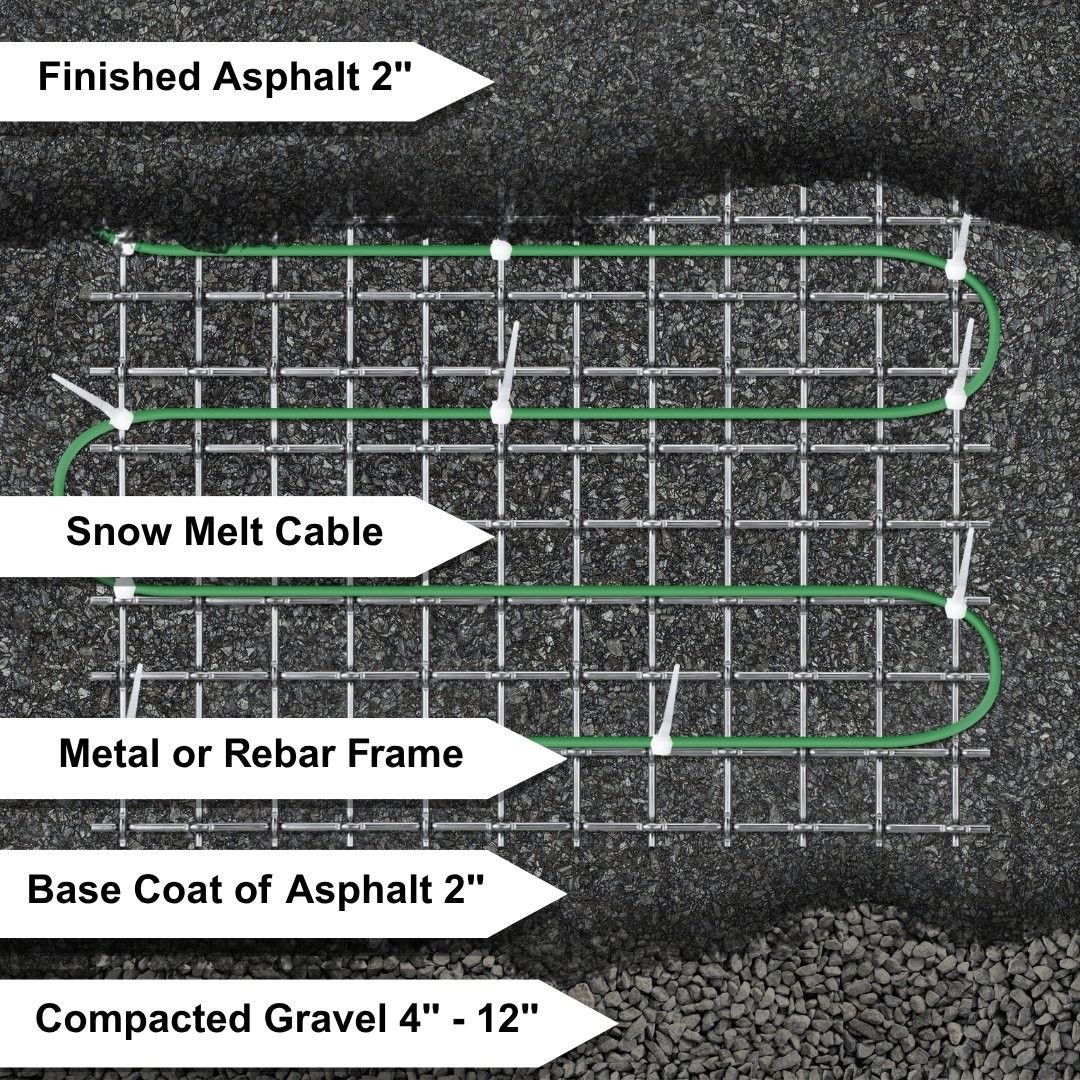
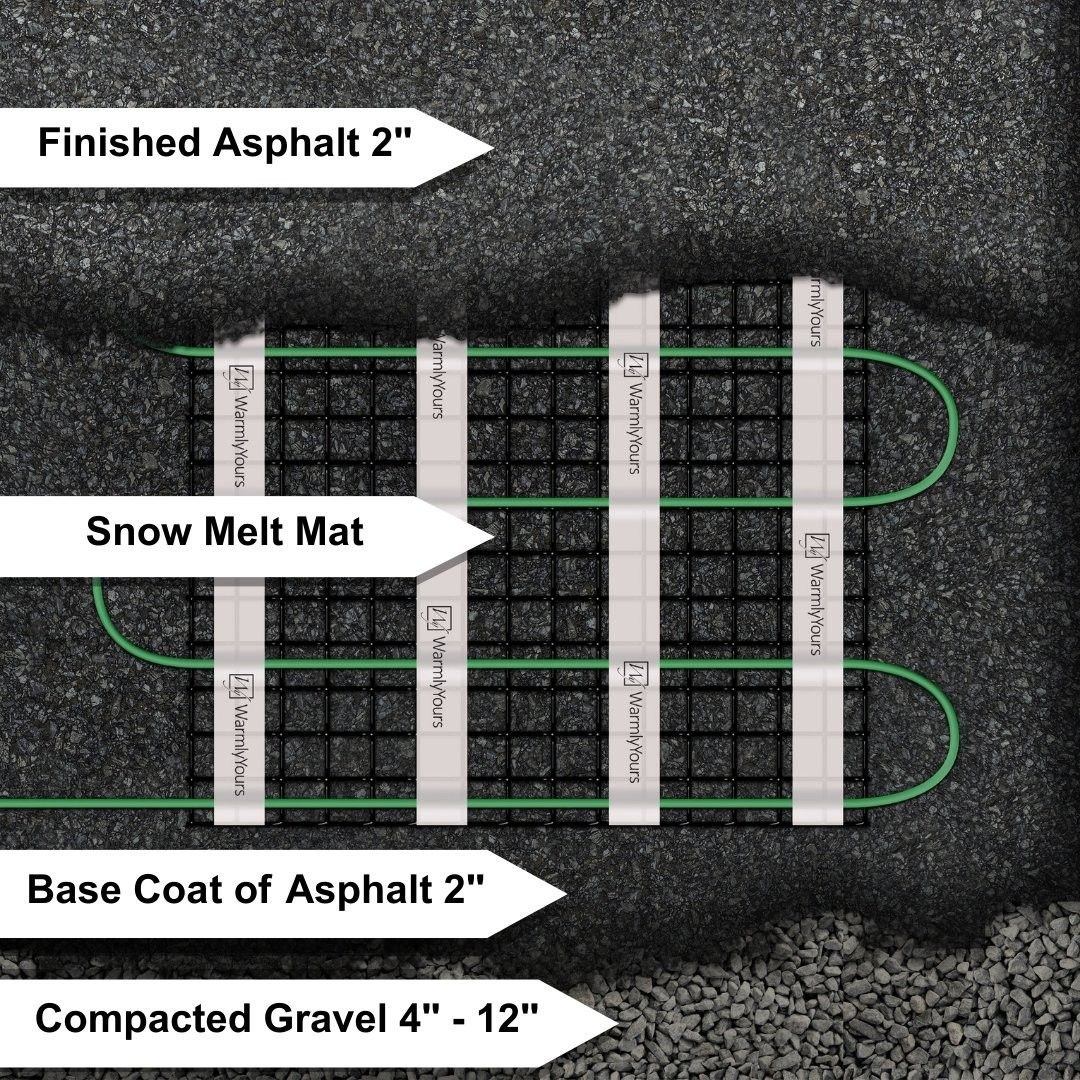
The heating elements are part of the paving build-up, protected between two layers of asphalt.
Layers, top to bottom
The order of work matters: the elements are protected and tested as the surface goes on.
The paving contractor prepares a compacted crushed-stone base ready for the asphalt.
The base (binder) coat of asphalt is laid and rolled smooth. The paver and the electrician agree whether it cools first.
Mats, or cable fixed to a frame, are laid on the base coat. The electrician routes the cold leads in conduit to a junction box and places the sensor.
The top coat is spread over the elements to at least the manufacturer’s minimum thickness, without heavy equipment running over exposed cable.
The electrician tests the elements as the asphalt goes on and again once it is finished.
Asphalt is laid hot and fast, so the plan has to be agreed before the trucks arrive.
The paving contractor and the electrician need the same layout, the same order of work and the same schedule.
Exposed cable and mats must not have heavy equipment run over them, which affects how the top coat is spread.
Tire-track coverage leaves room for a machine spreader on some driveways; full coverage generally calls for hand spreading.
Both are installed in asphalt. The shape of the area and how the paving is done usually decide which one, or which combination.
Open areas
Heating cable pre-spaced on a mesh, rolled out over the base coat.
Shapes and curves
Loose heating cable fixed to a frame, laid to the shape of the area.
Direct answers. Your design confirms the details for your property.
Yes. Heating mats or cable are laid on the base (binder) coat of asphalt and covered by the finished top coat, so the system sits inside the pavement and is not visible once the driveway is finished.
The systems are designed and specified for use in asphalt, and the manufacturer publishes an installation method for it. The design, the paving contractor and the electrician follow that method so the elements are protected while the asphalt is laid.
Often. The manufacturer’s manual describes cutting grooves into finished asphalt, laying heating cable in them and filling them with sealer. Whether that suits your driveway depends on its condition, so an assessment confirms the options.
The paving contractor lays the base and asphalt, and a qualified electrician places, connects and tests the heating elements. MeltGrid coordinates the design and the two trades.
Mats suit open, square or rectangular areas. Cable suits curves and irregular shapes, and can be laid at different spacings. Your design chooses between them, or uses both.
The installation method changes with the surface.
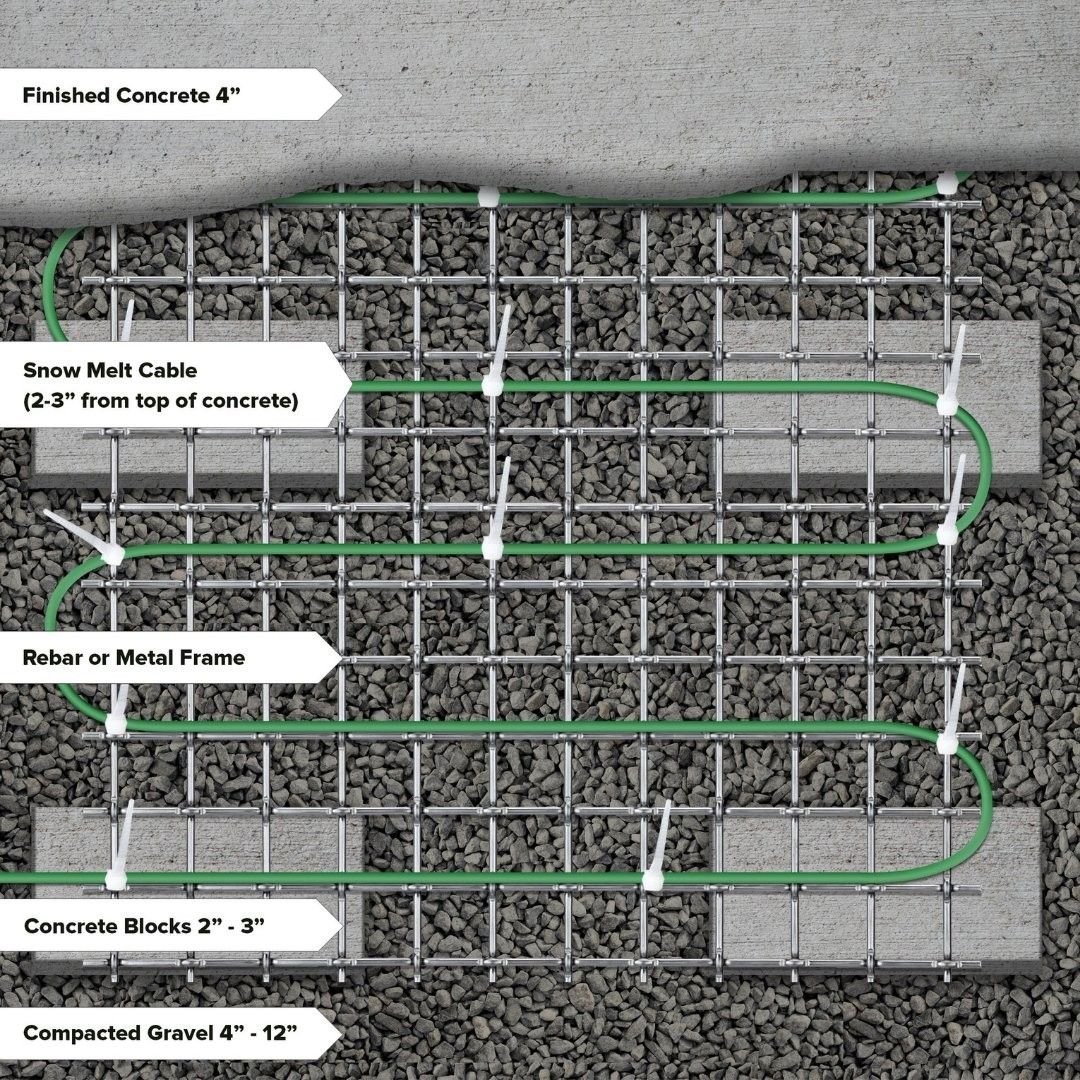
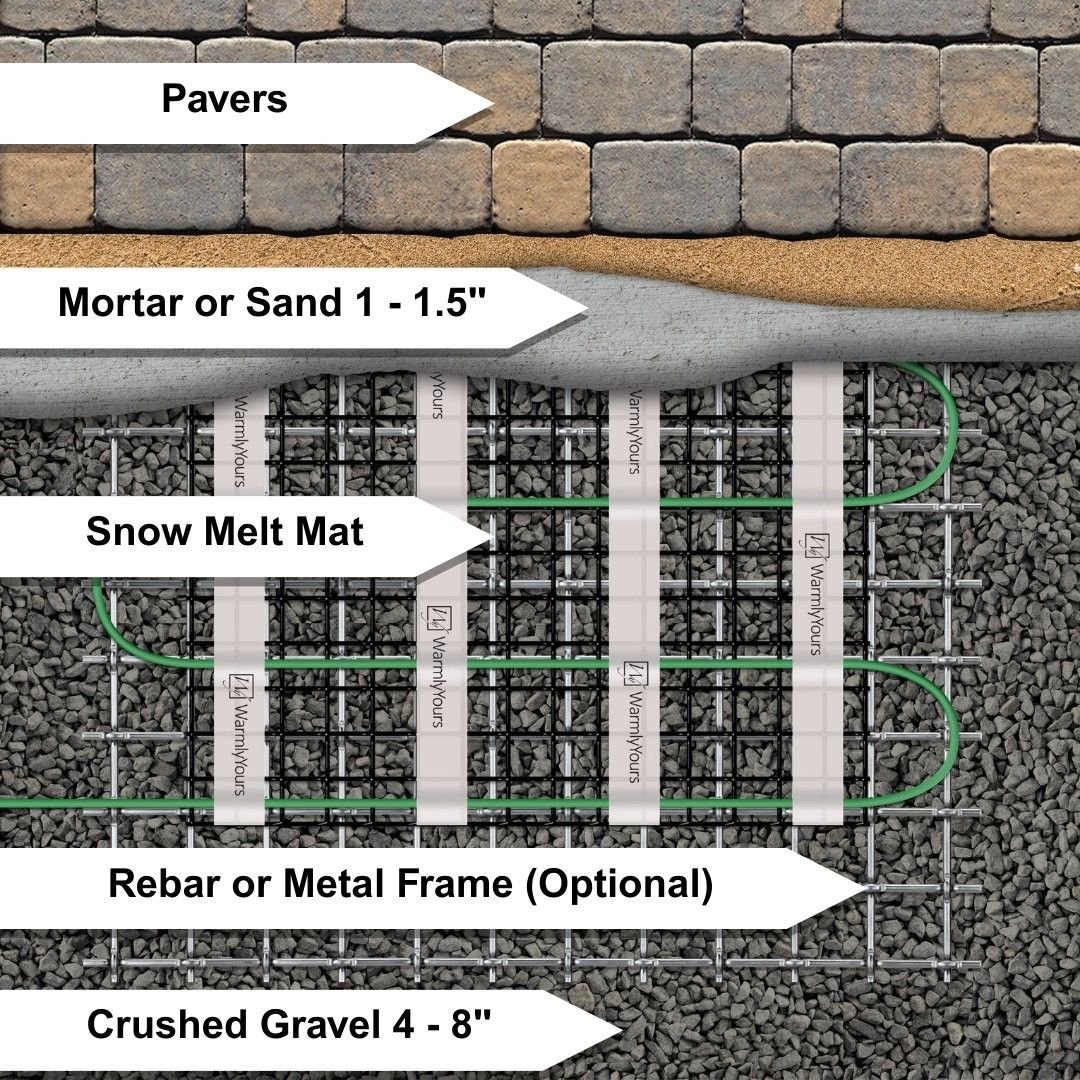
Can this go under an existing driveway? See retrofit considerations
Tell us about the surface and the area. We come back with a design and an estimate.